Break the Cycle: How Couples Stop Repeating the Same Fight
This webinar took place on March 3, 2026. Registration is closed and the replay window has ended. This archive preserves the event overview on recognizing conflict cycles, de-escalating, and repairing after arguments.
Looking for support now? Explore our marriage coaching.
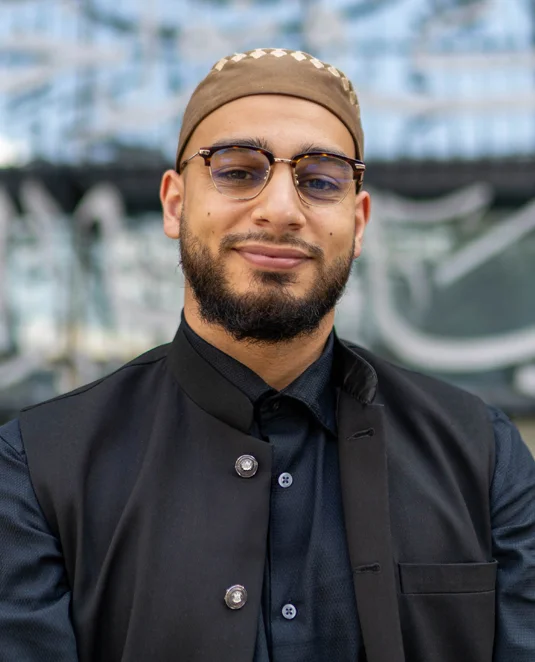
Faraz Malik
LPC, MA Islamic Studies,
MA Mental Health Counseling
Making marriage a Ramadan priority
The event connected Ramadan goals for Quran, prayer, and charity with caring for the person we share our life with. Its focus was on how spouses communicate, resolve conflict, and reconnect.
A spiritual goal
Improving your marriage is an act of worship
A relational goal
Break recurring conflict cycles and reconnect
A practical goal
Practice communication skills in 10 minutes a week
Does this feel familiar?
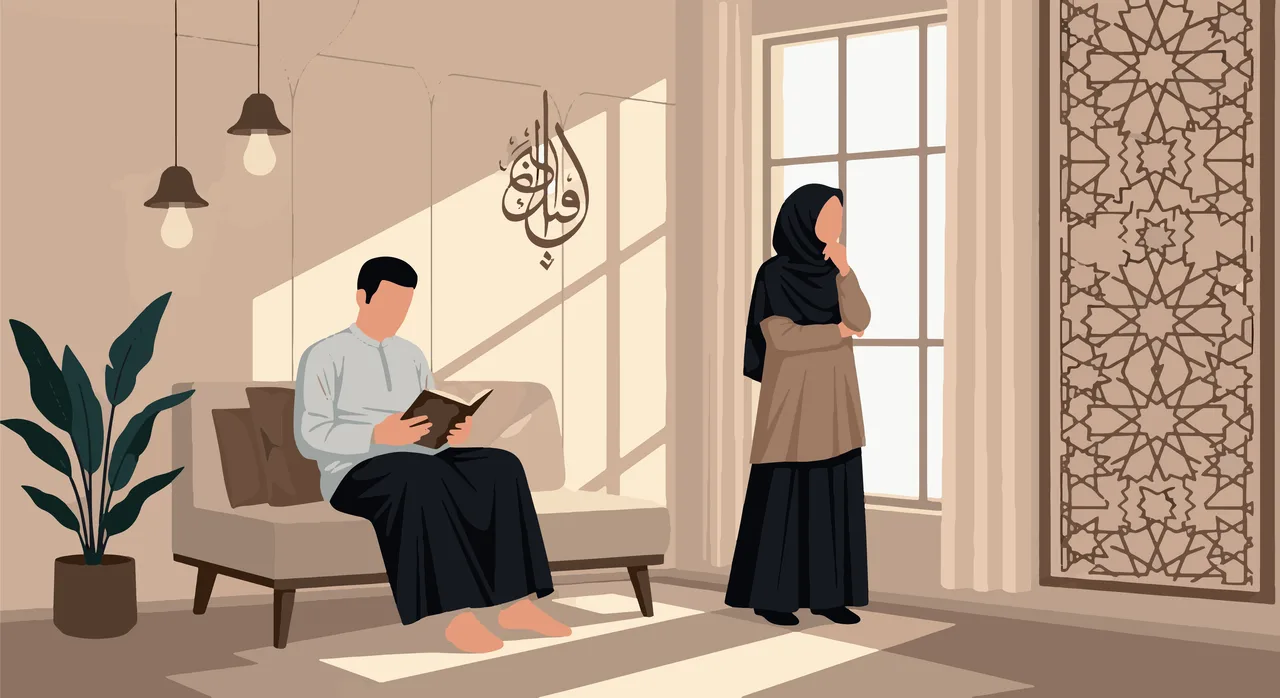
“We argue about the same thing… again.”
“One of us pushes to talk; the other shuts down.”
“Small issues become big fights fast.”
“After the conflict, we don’t really repair—we just move on.”
“We love each other, but we feel stuck.”
Topics covered in the webinar
The session focused on practical tools for recognizing and changing conflict patterns.
How to spot your cycle (the pattern underneath the topic)
The 2-step de-escalation script to lower defensiveness in the moment
A simple repair conversation to reconnect after conflict
How to replace "winning the argument" with protecting the relationship
Using a Cycle Breaker Worksheet to put the tools into practice
The goal: a clear next step to practice weekly in 10 minutes.
Understanding The Cycle
Pursue / Withdraw
One partner pushes to talk and connect, while the other pulls away to avoid conflict.
Pursuer
Pushes harder, asks more questions, becomes more emotional
Withdrawer
Shuts down, gets quiet, leaves the room or changes subject
Criticism / Defensiveness
One partner points out what's wrong, the other immediately defends or counter-attacks.
Critic
"You always..." or "You never..." — focuses on blame
Defender
"That's not true!" — explains, justifies, or deflects
Silent Treatment
Both partners shut down. The house goes quiet but the tension is loud.
Partner 1
Stops talking, acts like nothing happened
Partner 2
Waits it out, builds resentment quietly
Escalating Quickly
Small disagreements explode into big fights within minutes.
Partner 1
Raises voice, brings up past issues
Partner 2
Matches intensity, says things they regret
Which cycle do you get stuck in?
The webinar explored how to recognize these patterns and use practical scripts to break free from them.
Who the webinar was designed for

Intended audience
- Married couples
- Engaged couples
- Couples who want practical tools (not just theory)
Not designed for
- —Couples looking for legal/medical advice
- —Couples in immediate danger
If you feel unsafe, please seek local support immediately.
About the host
Faraz Malik
LPC, MA Islamic Studies, MA Mental Health Counseling
Faraz Malik is a Licensed Professional Counselor (LPC), educator, and religious scholar specializing in Islamic pre-marital and marital counseling. He holds a BA in Mathematics, a Master's in Islamic Studies, and a Master's in Mental Health Counseling.
With extensive training in both Islamic sciences—including the five-year Alimiyyah program at Qalam Seminary—and clinical mental health counseling, Faraz offers a unique perspective that bridges traditional Islamic scholarship with contemporary therapeutic approaches. This dual expertise allows him to address relationship challenges through a lens that honors both spiritual values and psychological wellness.
Recognizing the critical need for relationship education in the Muslim community, Faraz developed a comprehensive pre-marital and marital curriculum serving three populations: singles seeking marriage, couples in crisis, and post-divorce individuals. His framework integrates Islamic values with evidence-based therapeutic approaches, covering everything from courtship strategies to conflict resolution to understanding nikāḥ rights.
Educational content only; not a substitute for individualized therapy or medical advice.
Explore current resources
Current events
Explore our current workshops and event listings.
Marriage coaching
Learn about support for building a stronger marriage.
Relationship assessment
Start with our free relationship assessment.
Frequently asked questions
Ready to break the cycle?
The March 3, 2026 webinar has ended. Explore current events or marriage coaching for your next step.
- Current event listings
- Marriage coaching
- Free relationship assessment